Investment Banker Outfit Ideas: Banking in Style

Investment banking runs on long hours, high stakes, and unwritten rules. Your outfit communicates competence before you say a word, and in financial services, that first impression starts before the interviewer even shakes your hand.
The dress code for investment banking isn't always spelled out on a firm's website, but getting it wrong during an interview or a superday can cost you credibility you don't get back.
This guide covers what investment bankers actually wear, from foundational wardrobe staples to outfit ideas for client meetings, networking events, business travel, and interview day. The goal is simple: build a wardrobe that stays overall professional and holds up through the kind of hours investment banking demands.
What to Know About Dress Codes for Bankers
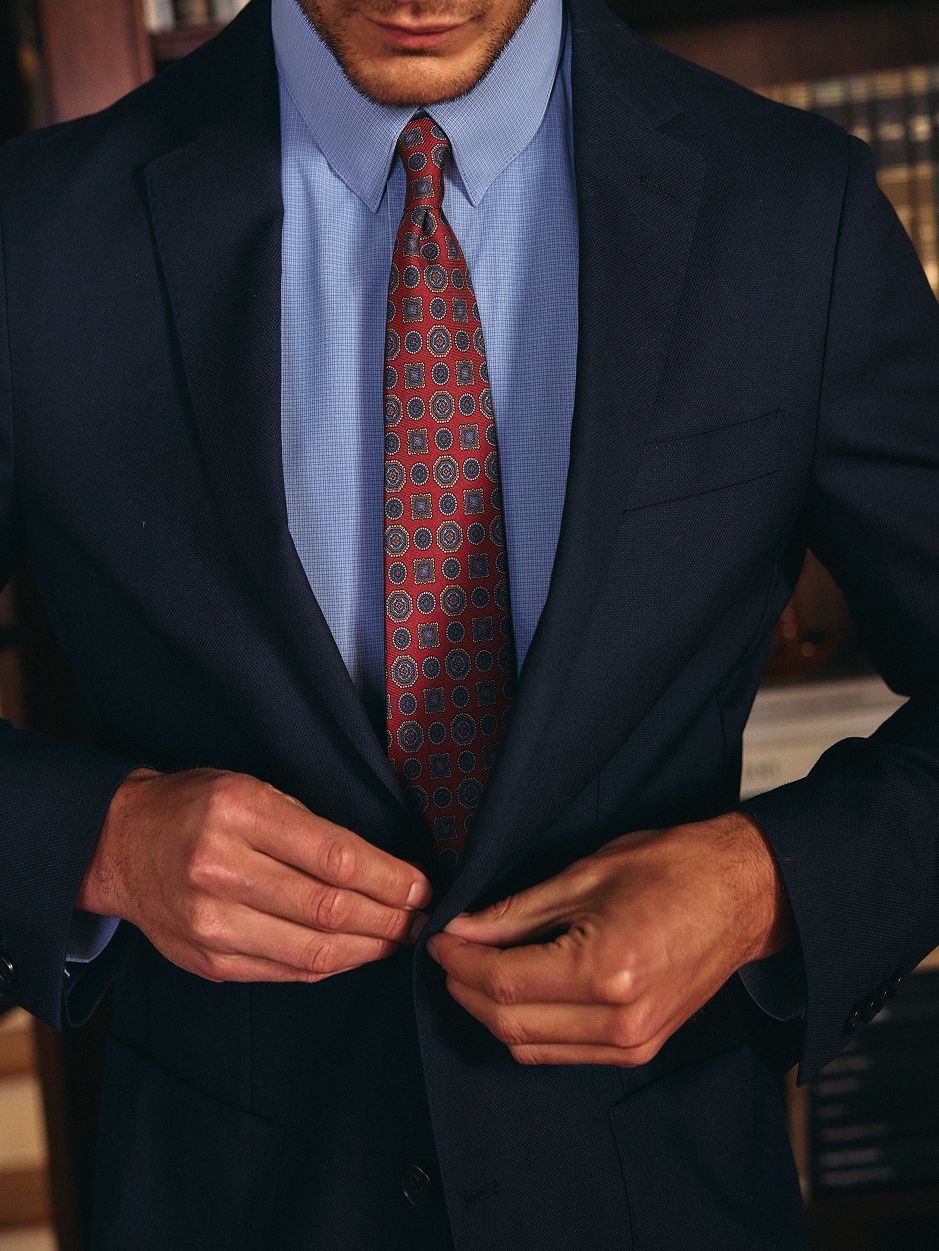
Business formal is the baseline at most investment banking firms, and the formality rarely dips even on lighter days. That means a well-fitted suit in navy or charcoal, a crisp dress shirt, a tie, and leather shoes. Accessories stay minimal and understated, and anything loud gets left at home.
Some firms allow smart casual on non-client days. But here's the rule: overdress until you understand the culture. Better to look too put-together than underdressed, especially for an interview.
Dressing appropriately isn't about vanity. It removes distractions so your work speaks louder than your wardrobe. When your clothes fit the environment, the focus stays exactly where it belongs: on your competence and contributions.
5 Investment Banker Outfit Ideas
Investment banking isn't one dress code. It shifts depending on the day, the audience, and the setting.
The traditional client meeting outfit
This is the most formal investment banking look, with everything pressed, precise, and client-ready:
- Navy suit
- Crisp white dress shirt
- Solid navy or burgundy silk tie
- Black oxfords
- Matching belt
The everyday office uniform
Charcoal or navy dress trousers paired with a light blue or white performance dress shirt. Knowing how dress shirts should fit is what makes this simple uniform look intentional, with a tie remaining optional depending on your firm's culture.
The networking event look
The goal is to look like you came from the office, not like you're trying too hard:
- Navy blazer
- Dress shirt without a tie
- Charcoal or navy trousers
- Leather loafers
The business travel outfit
Your business trip packing list should include a performance dress shirt, stretch dress trousers, and a blazer worn rather than packed. Everything should be wrinkle-resistant and packable, and a structured backpack beats a bulky duffel for getting through security and into a cab without wrinkling anything.
The right travel clothes for men let you step off the plane and into a meeting without stopping to iron.
The summer office outfit
Summer in investment banking still means business formal:
- Lightweight performance dress shirt
- Tailored trousers in light gray or tan
- Leather loafers
Choosing the best shirt fabric for hot weather and breathable construction solves the heat problem. Shorts and polos do not.
Staples for an Investment Banker’s Closet
Every investment banking wardrobe starts with the same foundational pieces.
Performance dress shirts
A white or light blue dress shirt is non-negotiable. Both colors pair with everything and signal professionalism. Stick to a classic button-down in solid colors, or a subtle pattern like a Banker Stripe (it’s in the name) if you want some variety, and save anything louder for the weekend.
Look for shirts with these performance features:
- Wrinkle resistance: keeps a crisp appearance through back-to-back meetings
- Moisture-wicking fabric: keeps you comfortable during late nights
- Stretch construction: allows natural movement throughout long days
Mizzen+Main's men's dress shirts offer wrinkle resistance, stretch, and moisture-wicking fabric for long office days, in white, light blue, and a few subtle patterns worth keeping in rotation.
Tailored suits
Navy and charcoal are the only suit colors you need when you're starting. Skip black. It reads as event wear, not investment banking.
Fit matters more than the label on the inside. A well-fitted navy or charcoal suit should meet a few standards:
- Shoulders sit clean without pulling or bunching
- The suit jacket tapers at the waist without excess fabric
- Trousers break right at the shoe, never oversized or pooling around your ankles
As a rule of workplace etiquette, keep the top button fastened when standing and unbuttoned when sitting. Mizzen+Main's men's suits and blazers combine timeless suit shapes with stretch that makes long days easier to move through.
Dress trousers
When deciding between chinos and dress pants, stick to flat-front dress trousers in neutrals: navy, charcoal, and medium gray. Prioritize stretch and wrinkle resistance so you can comfortably manage a 60-hour workweek at your desk followed by presentations.
Mizzen+Main's men's dress pants add stretch that helps through long desk hours and presentations.
Blazers and sport coats
A navy blazer is the most versatile piece outside a full suit. It adds structure for networking events, internal meetings, and business casual days.
Avoid flashy patterns. Stick to solids or understated textures like herringbone.
Professional dress shoes
Closed-toe oxfords in black or brown shoes are standard for client-facing days. Loafers work for business casual only.
Always match your belt to your shoes: a black belt with black shoes, a brown belt with brown shoes. Scuffed leather reads as sloppy fast, no matter how put-together the rest of the outfit is.
For accessories, a classic watch and optional cufflinks should be understated and sleek. Nothing that draws attention away from you.
Dressing for an Investment Banking Interview
An IB interview isn't the place to experiment. Whether it's a first-round call or a full superday, the goal is the same: walk into the interview room looking like you already belong on the desk.
You don't need a high-end suit to do that. You need one that fits, holds a crease, and doesn't wrinkle by lunch.
Stick to a well-fitted navy suit, a white or light blue dress shirt, and a plain or subtly striped tie in a conservative knot. Solid colors and subtle patterns read as intentional. Anything loud, from a bold stripe to a flashy pocket square, distracts from what the interviewer actually wants to hear: your answers.
A few details separate a candidate who looks like they belong from one who doesn't:
- Attention to detail: a pressed shirt, trimmed nails, and a fresh haircut go further than an expensive suit
- Neatness over newness: a well-kept, older suit beats a wrinkled new one every time
- Tidy accessories: a slim leather folder for notes and a resume looks more put-together than a backpack in the interview room
- Closed-toe shoes only, cleaned and free of scuffs
Match your belt to your shoes, black to black or brown to brown, and keep the tone consistent from tie to socks so the whole look stays overall professional.
If you're commuting to the interview with a backpack, leave it in the lobby or a locker if you can. It's fine for getting there. It doesn't belong in the interview room.
Build a Wardrobe That Works as Hard as You Do
A complete investment banker wardrobe doesn't require dozens of pieces. A few great suits, several performance dress shirts, quality dress trousers, a navy blazer, and well-maintained leather shoes cover nearly every situation, from a first-round interview to a client dinner.
Quality beats quantity every time. Well-made, timeless pieces last longer and can cost less per wear over time than a closet full of trend-driven ones you'll replace in two years.
Mizzen+Main builds apparel for that purpose: clothes that move with you, hold their shape, and stay out of the way. The pieces are made to move, last, and look good, so you can focus on the day ahead.
The Mizzen+Main Style Desk is our editorial voice on classic menswear. Content is developed with and reviewed by Will Jenkins, Brand Manager, who works directly on Mizzen+Main's brand strategy, positioning, and tone of voice.