A Men's Guide to Tech Casual Dress Codes

Tech casual has its own dress code. It's just not obvious at the start, which is what makes it tricky when you're beginning a new role or transitioning from a more formal industry.
Tech casual is really about finding the right balance between casual and intentional. In most offices, the goal is not to look dressed up. It’s to look like you understand the work environment, the occasion, and how to let your personal style show up without losing the plot.
Tech has long liked to satirize traditional office style, from the mythology around Steve Jobs to the stripped-down uniform still associated with Silicon Valley, but that doesn’t mean appearance stops mattering.
Here's the quick answer: Tech casual sits below business casual on the formality spectrum. Think clean basics, smart fits, and zero ties.
This guide covers what to wear, what to avoid, and how to dress for every scenario in a modern tech workplace, from standup meetings to client presentations to after-work plans. At Mizzen+Main, men's polos are perfect for this environment, comfortable and smart. The materials resist wrinkles, keep their shape, and stay comfortable through long days.
What is the Tech Casual Dress Code?
Tech casual is the unofficial uniform of the modern tech industry, and recent data bears that out: 43% of workers say they have not worked in an office with a dress code in the past year(opens in new window)1. It leaves suits and ties behind without dropping the expectation that clothes should look clean and intentional.
The look centers on well-fitted essentials:
- Chinos
- Polos
- Minimalist sneakers
Think of it as a spectrum: Business professional → Business casual → Tech casual → Casual. The key distinction is that "casual" never means careless. Clean garments that fit well remain the baseline expectation.
The best version of it favors function, versatility, and pieces that feel easy to wear without looking messy. The core wardrobe tends to center on a few reliable workwear staples rather than trend-driven pieces.
Two factors shape how casual you can go:
- Company culture: Early-stage startups skew relaxed, while enterprise companies lean closer to business casual.
- Your role: Engineers often dress down, while sales and client-facing teams dress up a notch.
Core Pieces for a Tech Wardrobe
These foundational items mix and match to cover everything on your calendar. A few strong pieces do more than fill out your closet, they complement everything around them.
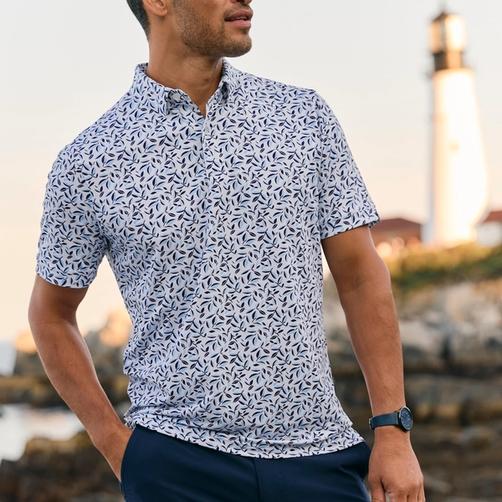
Performance Polos
It’s one of the easiest ways to add a little finished look without losing the ease that makes tech casual work in the first place. The structured collar reads serious without veering into formal territory, making it ideal for office days and video calls alike.
Skip oversized logos and opt for clean designs in neutral colors. Men's polos built with performance fabric resist wrinkles and offer moisture-wicking properties, keeping you looking put together through long days.
A good polo is a wardrobe staple because it can move from the office into the weekend.
Structured T-shirts
Neutral colors in navy, white, charcoal, or black work best. Skip the graphics and logos.
Fit matters more than brand name here. A well-constructed t-shirt keeps its shape and looks more intentional. When the collar starts stretching or pilling appears, it's time to retire it. High-quality men's t-shirts in structured cotton hold their shape, wear after wear.
Button-down Shirts
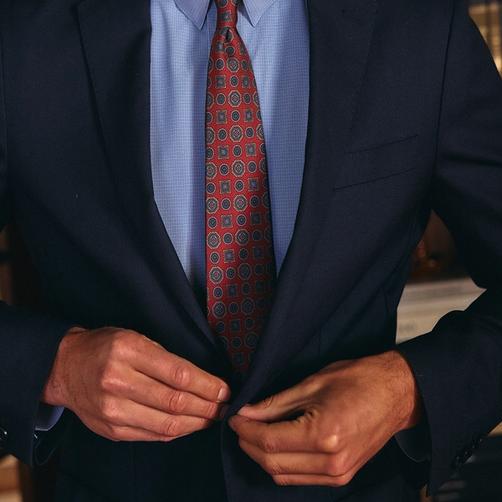
These are your meeting-day anchors. Casual oxfords and performance dress shirts both fit the tech casual mold, provided you know .
Stick to classic colors:
- White
- Light blue
- Soft checks
Wrinkle-resistant fabrics with stretch let you look pressed without touching an iron. Untucked dress shirts offer the flexibility to wear them out in casual settings or tucked for presentations.
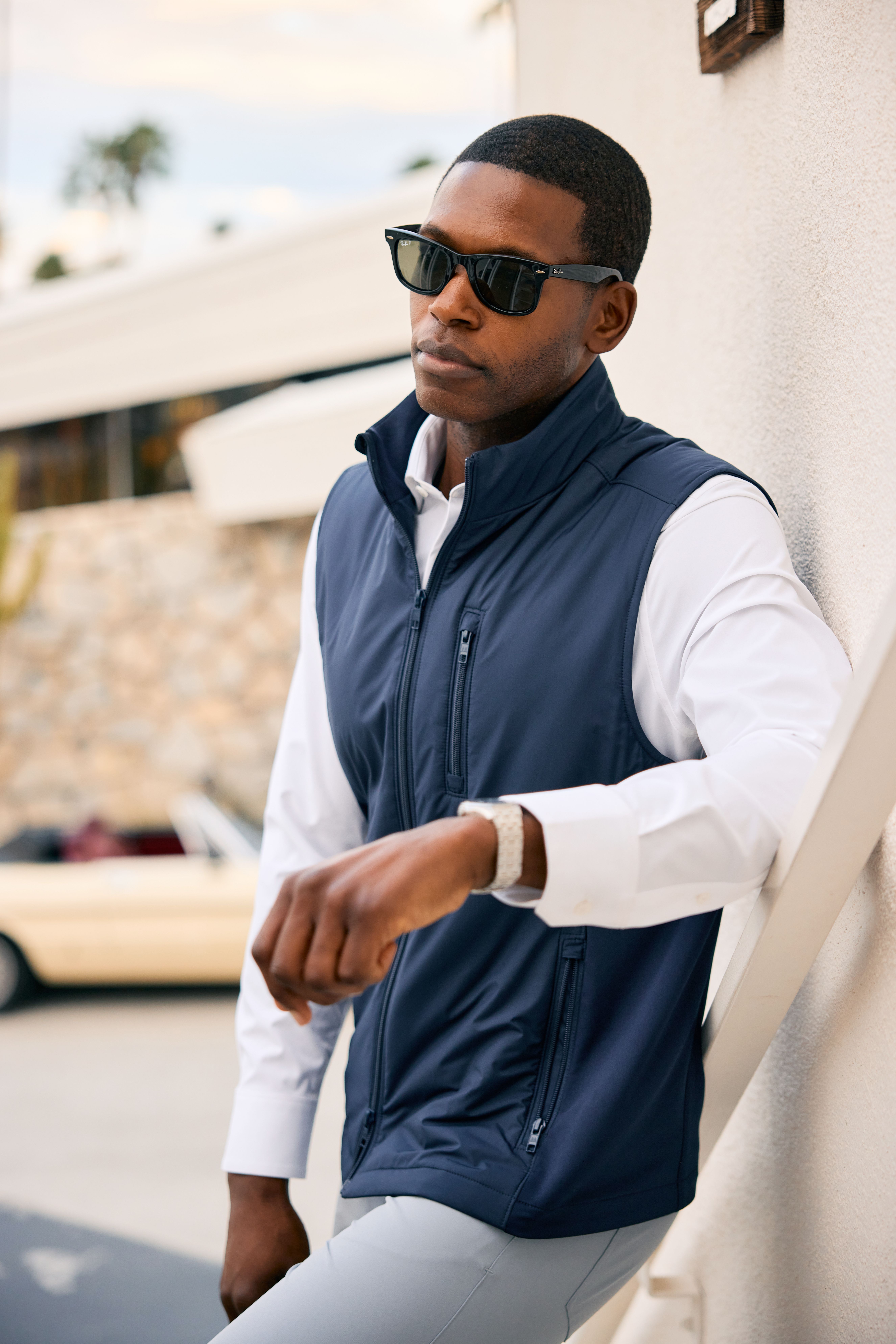
This is also the category that gives you the most room to elevate the look when the occasion calls for it. Add a soft jacket or lightweight outerwear layer, and the same shirt that works for a regular office day can handle a client dinner or presentation. If your office leans more formal, clean slacks can work here too, though chinos usually feel more in step with tech casual.
Chinos and Stretch Pants
When , chinos occupy the sweet spot right above jeans. They’re one of the most useful pieces in a tech casual wardrobe.
Look for modern tapered fits with stretch fabric. Navy, charcoal, khaki, and olive cover most situations. Men's chinos engineered with performance materials move with you and maintain their shape all day.
Clean Sneakers and Smart Shoes
Minimalist sneakers in white, gray, or navy serve as the default. In most tech offices, choosing the right shoe matters because footwear sets the tone faster than almost anything else. Leather loafers or suede chukkas step things up for meetings without feeling overdone. Avoid running shoes, flip-flops, and anything too sporty or beat-up.
How to Dress for a Tech Job
The right outfit depends on what's on your calendar that day.
That is really the heart of dressing for tech: knowing how to strike the right balance for the occasion without losing sight of the broader work environment. The best outfits remove friction. You are not thinking about them all day, which is part of what makes dressing well feel useful rather than performative. In a small way, that supports productivity too.
Everyday Office Look
The daily formula: a polo or fitted t-shirt, chinos or dark jeans, and clean sneakers. This outfit requires zero thought once you've built a rotation.
It's comfortable, intentional, and appropriate for most days in this environment.
Meeting or Presentation Day
Upgrade to a button-down shirt with chinos or dark jeans and loafers. Knowing how to layer an unstructured blazer adds presence without feeling stuffy.
Performance fabrics help here. They stay wrinkle-free after commutes and wick moisture when pressure builds.
Hybrid or Remote Work Setup
When managing a , wear a clean polo or button-down on camera. Solid colors perform better on video than busy patterns, which tend to distort. Keep hoodies and wrinkled t-shirts off calls. A little effort makes a clear difference.
After-work plans straight from the office
Swap sneakers for loafers or add a sport coat. The same pieces can work for dinner, drinks, or a round of golf. Men's golf apparel shows that range, moving from office to course without a wardrobe change.
Tech Casual by Company Type
Not all tech companies dress the same, so reading the room matters.
Early-stage Startups
This is the most relaxed end of the spectrum. T-shirts, jeans, and sneakers dominate.
Even here, choosing a polo over a graphic t-shirt or dark jeans over faded ones sets you apart without overdoing it.
Mid-size and Growth-Stage Tech Companies
This is the sweet spot for tech casual. Polos, chinos, button-downs, and clean sneakers are standard daily wear.
Meetings with leadership or investors may call for a slight upgrade: a tucked shirt, a blazer, or leather shoes.
Enterprise Tech and Client-Facing Roles
These environments lean closer to traditional . Button-downs, chinos or dress pants, and leather shoes serve as the baseline.
Sales, marketing, and executive roles typically dress a step above engineering teams.
Dress for Comfort and Credibility in Tech
Tech casual is about looking professional without trying too hard. Small choices, like the right fabric and a better fit, make the look feel intentional, and most importantly, smart.
Performance features like wrinkle resistance, stretch, and breathability close the gap between feeling good and looking stylish through long days and unpredictable office temperatures.
Mizzen+Main designs clothes for that balance. The pieces pair classic style with performance fabrics, so looking put together does not have to feel restrictive. In short, clothes that look great but feel even better.
Sources:
- Monster. 43% of Workers Say Their Office Has No Dress Code: How Workplace Fashion Is Evolving. https://www.monster.com/career-advice/research/dressing-for-work-poll-2025(opens in new window)
The Mizzen+Main Style Desk is our editorial voice on classic menswear. Content is developed with and reviewed by Will Jenkins, Brand Manager, who works directly on Mizzen+Main's brand strategy, positioning, and tone of voice.